Posts

An old enemy and an old remedy!

                  My recent sowings of small fast salad  greens have failed to appear. At last I've found the culprits! Hordes of tiny black slugs which spend the days underground come to the surface and graze while it's dark. Goodbye seedlings!I slaughtered scores of them by torchlight last Friday night!                   This afternoon I sowed brassicas- in pots- for early summer use-or perhaps earlier. Cabbage:-Hispi, Spring Hero and Winter Jewel There's more choice for calabrese: I use Aquiles, Kabuki and Marathon.                       I'll sow some more quick leaves directly into slug-free ground:- pak choi, rocket, kailaan, radish, spinach and mizuna will add to lettuce in mid-winter   ...
Autumn 2017

               Tomato disaster at Cae'r Delyn! A fast-growing mould has attacked leaves,stems and then fruits. Within two weeks most of my plants have had to be removed, with about  1 in six surving - and healthy  - for now ! Only once before - about 10 years ago have I seen this disease.                Where I have cleared the ground- and in every vacant space - I am watering thoroughly.I shall now sow some small leafy crops for winter use. Lettuce (4 kinds) pak choi, tatsoi, spinach (annual and perpetual) and chard, also mustard, rocket , cress---and radish will all germinate quickly. Use the warmth in the soil and this year's late ration of sunlight to give interesting, fresh, green eating and will wait in the ground for months.                Dare to think of next...

Early September - keep the growing going

I'm giving tomato plants lots of care and attention and aiming for good picking in October. Generous feeding now will keep growth strong for a while, and supply the developing fruits. All growing points above head-height are stopped, and all side-shoots above waist height are removed. But one low strong side-shoot on each plant can grow and bear two or three trusses, each shortened to leave the best flowers. Damaged or diseased leaves are removed - but I try to do all cutting when the air is dry, in the hope that mildew spores will fail to establish. Sowing carrots now is a gamble as are beetroot. I'll chance a sowing of 'mange-tout' peas, which could cheer up late October or even November. Lettuce sown now can do well, though firm hearts may not form. Four or five different varieities can mature successively and may well mature into December. Spinach and chard sown now will supply during the shortest days

Quick! Quick! mid August

In five weeks' time we expect the Autumn Equinox, after which light declines in strength and duration. Plants with good-sized healthy leaves carry on growing- slowly!                   Some seeds sown now will grow plants of a useful size ..to keep growing during shorter days.                       Choose dwarf or speedy varieties of carrot, beetroot, lettuce and spinach; also dwarf French beans and mangetout peas. A special word about pak choi! It starts quickly, and can be eaten from small leaves up to large into the winter. Other salad leaves may also reward an August sowing.                     I'm still shortening the new trusses of tomato flowers and removing sideshoots; and it's time for anoth...

Early August -- time for a big sowing!

An empty tunnel in winter is a waste of a precious resource. B y sowing now, you can produce plenty in autumn and provide variey and vitamins during the shortest days. Dwarf French beans and mange-tout peas can spice up October and November. Spinach and chard can be partially picked and will keep re-growing all winter. Pak choi is reliable and long standing. Beetroot, carrot and kohl-rabi will wait patiently in the ground for months and still taste as fresh as in summer. All these crops germinate quickly now, and grow fast while days are long. The whole process is slower from sowing later in August, and the final yield is much smaller. I'm going to try a sowing of calabrese now and another in September; daring and dangerous? I'll take a chance!

Keep caring-and controlling fast Summer growth

             As the earliest crops finish - lettuce, French beans, peas, spinach, cabbage, broccoli etc., new sowings can fill the spaces. I'm sowing Cobra - a climbing French bean - mangetout and sugarsnap peas for Autumn eating. Salad leaves sown now have a long eating season.           Tomato and cucumber plants respond to careful management. An adequate and regular water supply is essential - no drying out! Developing fruit benefit from regular liquid feeding. Reducing the number of flowers per tomato truss ensures healthy development of all the crop. I open vents and door to maximum - better draughty than too humid.                                                    ...

High summer - think ahead

The higher space in the tunnel will become available by September; it can be used by climbing french beans- Cobra does it well -which yield late beans in plenty.             Seeds of Cobra sown in late July -in situ or in pots for later planting - will produce fast growing plants to race up the sticks in August and September.              Tomato plants have ample bulk by now which will feed the later fruits. I'm nursing new trusses, week by week, and shortening them, to develop through late Summer and Autumn. Late August flowers  give you October fruit! Surplus "cherry" tomatoes freeze well- for direct cooking in Winter.               Removing the oldest tomato leaves could  reveal space for sowing pak choi, rocket, mustard, mizuna, cress, kailan kichi, and annual spinach. Fast growers every one!...

J.A.M. in the polytunnel

Just about managing. The long days with maximum sunshine have produced rampant growth. Careful management is needed. Big healthy plants should lead to big crops. If all tomato flowers are allowed to fruit, the plants will be overloaded, fruit size reduced and a glut in August will leave exhausted plants with little late yield. I'm removing complete trusses of tomato flowers and reducing the size of the rest. A strong low sideshoot can remain, and be nursed to continue flowering when the main plant is stopped at about 5 feet. This will give tomatoes in October. Cucumbers easily overcrop - and then give up early. Allow fruit only on the main stem and remove every other small fruit. The same discipline suits courgettes. A weekly feed will keep the swelling fruits supplied with resources. Leaves in the shade do little good - a sharp knife is best for all pruning or trimming. Choose a day when clothes are drying well.

June 11th It's rush-hour in the tunnel!

Image
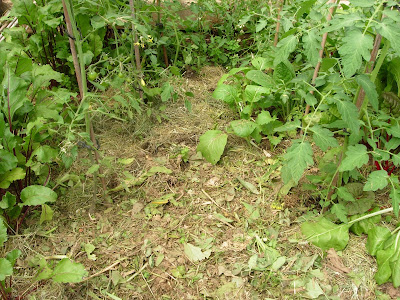
All crops are growing fast - likewise the weeds; so - collect larger leafy weeds, chop them up with kitchen by-products. Add some mowings. This mixture can be spread to cover - and protect - bare earth. TOMATOES I reduce the load on every tomato truss, while buds are green. As a result, there will be no tiny fruits - every tomato will be edible. All plants with flower or fruits on receive a liquid feed every week. I use Maxicrop. Tomato plants - and others - produce excessive amounts of leaf. Only those that get direct light do their best, so I cut off shaded leaves. Air movement is improved and mildew spores have reduced chances - and more nutrients reach the well-lit leaves of our precious plants.

End of May.

Image
I'm still chopping up leafy weeds and vegetable waste, to scatter between plants and rows in the polytunnel; cut grass from the lawn, as well. The generous watering in the hot weather passes through this covering, and less of it evaporates. June is a good month to erect a new tunnel, so the polythene cover can get tighter through the autumn months. A great variey of crops can be started from late July to September. I once planted dahlias in a polytunnel  - it was a mistake. Sweet peas and chrysanthemums make good autumn crops. Order chrysanth plants now. I'm sowing more rocket, spinach, tatsoi and other quick leaves to make salad and later chopped leaves to scatter.

mid May

Image
Busy, busy. Everything is growing fast. Leafy weeds and surplus spinach are mixed with vegetable waste from the kitchen, chopped with a sharp spade then scattered between growing plants. Very little soil is visible. We are harvesting broad beans, mange tout pease, cabbage,  calabrese, spinach and salad greens - some from autumn sowings.  Sunday dinner  I'm sowing small patches or rows as space allows with rocket, cress, tatsoi, radish, mustard, spinach - even a few sugar snap peas. These will use nearly all available light - with speedy returns.

Tunnel watering.

In a sunny week - as forecast - leaves will lose lots of water; so roots need a plentiful and constant supply. One generous watering can last for days, much better than a daily top-up. After watering, cover the wet surface with chopped green leaves and/or grass mowings - plentifully, but loosely. Add a bit more surface material at any time. Replenish water after three or four days according to the weather. Young plants may benefit from light shading. Empty spaces can be sown with spinach (not perpetual); the young leaves make good salad. Eventually chop up the large old leaves for ground cover and sow some more!

First May sowings

Image
 Courgettes, French beans and sweetcorn sown in their final location will germinate quickly. Water the ground with warm water before sowing. Beetroot, spinach and small salad crops will germinate and grow very fast. It's time to plant tomatoes and cucumbers - warm water before planting. Sweet Million, Bejbino, Bottondoro, Sweet Olive and Miele are good cherry types; Vanessa is our favourite slicing tomato.  Salad on May 2nd from February sowings  Sow your favourite cherry tomato now for a delicious and prolific harvest in September and October. The cherry types are good frozen for cooking in the winter. May 2nd sweet peas sown in October. Also picked first strawberries

Late April sowings

Beans are on my mind! The seeds can stand on a wet cloth or tissue for the night before sowing. I'll sow a double row about 2" deep of dwarf French bean seeds. For runner beans I'll use Firestorm as it's self pollinating; seeds 6" apart in a double row. After making the drill, I'll water well with hand hot water and put the seeds on warm damp earth, covering with drier soil. A row of sugar snap peas sown in the same way will give me peas in June. June and July are the best 'season' to put up a new polythene tunnel - for winter crops!

Mid-April sowings

Image
Tomato plants  will be ready in May.They won't cast much shade for weeks. I'll fill the whole area now, sowing  (not thinly) rows 5" apart of spinach, rocket, mustard, radish,  beetroot, mixed lettuce, mizuna, cress and oriental leaves. We,ll pull some seedlings every week or so from early May to  mid-June and use as salad. These are seedlings from a March sowing November sowing   I sowed chard, spinach, lettuce, rocket and peas in  november. First flowers on the peas; cabbages are hearting up.